



India has coupled a working fast reactor to a thermochemical hydrogen plant, and has done it before any other nation. It is a proof, not yet a product; and the distance between the two is the whole story.
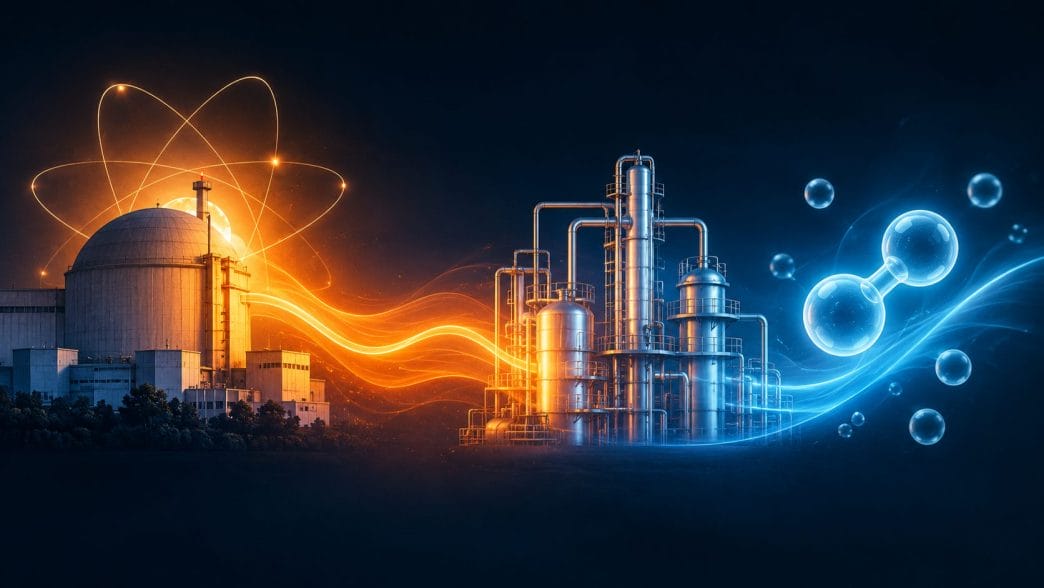
On 26 June 2026, on the Tamil Nadu coast at Kalpakkam, the Department of Atomic Energy inaugurated a hydrogen plant that runs on the heat of a nuclear reactor. The plant uses the copper–chlorine (Cu–Cl) thermochemical cycle, a chemistry designed by the Bhabha Atomic Research Centre, and it draws its heat from the Fast Breeder Test Reactor (FBTR). Other countries have studied this marriage for decades. India has now consummated it at the Indira Gandhi Centre for Atomic Research.
What Was Inaugurated, And What Was Not
Precision matters here. While viral explainers on the internet might have hailed a “hydrogen fast breeder reactor”, no such machine exists. What exists is a hydrogen production facility, a chemical plant, attached to an old and trusted reactor.
It is essential to clarify that the facility is a technology demonstrator, and it is powered by the 40 MWt FBTR, not by the 500 MWe Prototype Fast Breeder Reactor (PFBR) that reached criticality in April 2026. The two Kalpakkam milestones are related, but they are not the same machine. None of the official reports reviewed for this article states the plant’s hydrogen output.
The official framing is deliberately modest. The plant exists to validate hydrogen production from nuclear heat. This helps give engineers operating experience, allowing them optimise the Cu–Cl process, and support later scale-up toward commercial deployment. IGCAR’s director, Sreekumar G. Pillai, placed the achievement atop more than four decades of FBTR operating experience. So, while the ambition is anchored to a long-term vision, the claim backing this inanuguration remains strictly grounded in the present capabilities.
Why Heat, And Why Copper–Chlorine
Conventional “clean” hydrogen is made by electrolysis, a process where electricity splits water. In a nuclear plant, that route is circuitous. The reactor makes heat, the heat makes steam, the steam turns a turbine, the turbine makes electricity, and the electricity then splits the water. Every step is a toll booth, and every toll is paid in lost energy.
Heat, not electricity, is the native currency of the atom. The Cu–Cl cycle spends it as such.
The Cu–Cl cycle skips the toll booths. It is a hybrid process, mostly thermochemical, where a single electrolysis step splits water through a loop of copper chlorides, recycling them as it goes. Its virtue is temperature. It needs heat of up to about 530 °C, whereas rival cycles such as sulphur-iodine demand far fiercer conditions.
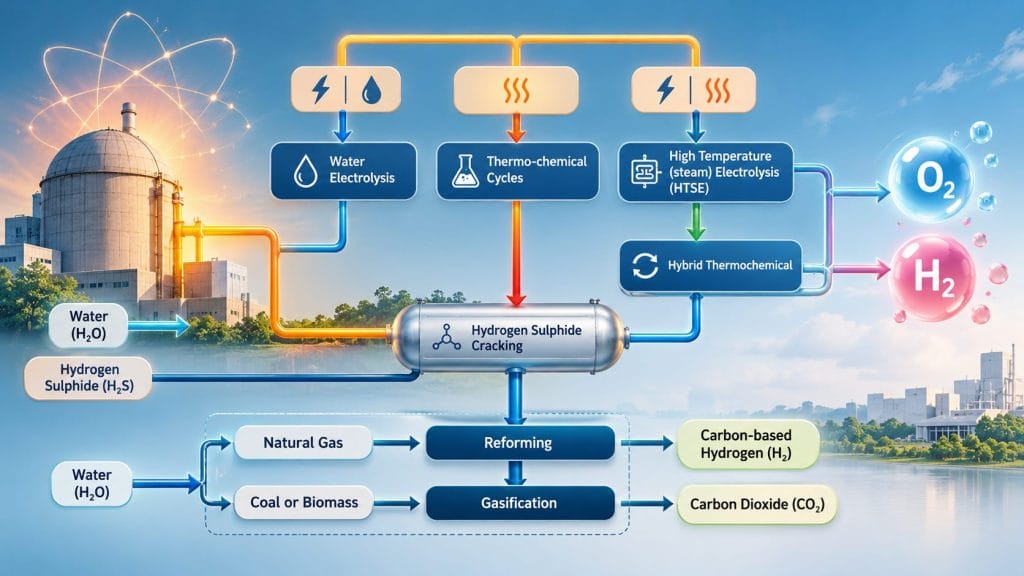
Its hydrogen-releasing step, in which copper meets dry hydrogen chloride gas, runs at roughly 430-475 °C – the temperature a sodium-cooled reactor can supply. Technical literature projects heat-to-hydrogen efficiencies of up to about 50% for nuclear thermochemical routes, which is the prize that justifies the chemistry’s complexity.
The Reactor Behind The Reactor
The FBTR is India’s only operating sodium-cooled fast reactor. A 40 MWt loop-type machine fuelled by a plutonium–uranium carbide mixture, built almost entirely with indigenous manufacture. It was never meant to dazzle; it was meant to teach. For decades it has taught Indian engineers how to handle liquid sodium, fast neutrons and breeder fuel. Now it teaches the next important lesson: that a research reactor can serve as a heat source for industry.
Beside it stands the larger story. The 500 MWe PFBR, under construction since 2004 and once projected for 2010-11, achieved first criticality on 6 April 2026 at 8:25 pm IST. This is more than fifteen years behind its original schedule. Fuel loading had begun on 18th October 2025 after clearance from the Atomic Energy Regulatory Board. The IAEA’s Director-General, Rafael Grossi, called the milestone a key step for fuel sustainability and the future of nuclear energy.
The PFBR now faces staged power ascension, grid synchronisation and sustained operation. Only then will India join Russia as an operator of commercial-scale fast breeders. The two events form a diptych. One reactor proves that India can breed fuel, the other proves that India can spend heat. Together they suggest a nuclear programme that is stretching beyond kilowatt-hours toward molecules.
The Road From Demonstrator To Industry
What follows is analysis. The Kalpakkam plant has not yet been declared commercial, and several obstacles stand between a demonstration and a hydrogen economy.
Scale: A pilot proves the chemistry but it does not prove the tonnage. Moving from a demonstrator to industrial volumes demands larger reactors, larger heat exchangers and years of continuous running.
Materials: Hot chlorine compounds are brutal on metals, so durability will decide the plant’s life and cost.
Safety: Putting a chemical plant beside a sodium-cooled reactor requires rigorous isolation, and regulators will insist on it.
Economics: Electrolysers and solar power are growing cheaper by the year, so nuclear hydrogen must beat a moving target, not a fixed one.
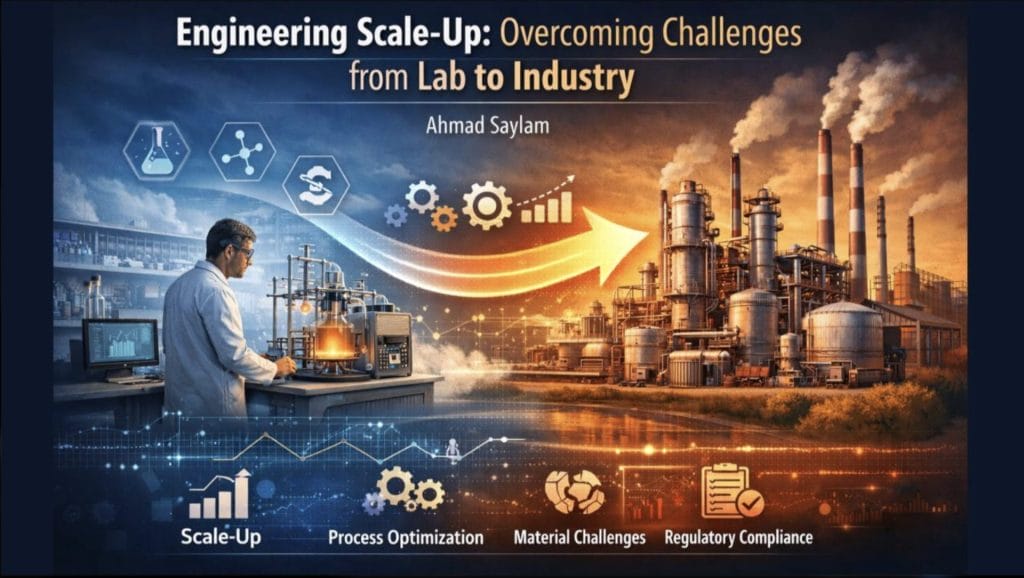
The first nuclear-heated hydrogen plant was announced not as a product, but as a proof. That is the honest way to begin.
Why Persevere, Then?
Because India’s National Green Hydrogen Mission aims at five million tonnes a year by 2030, and the demand behind it, in fertiliser, refining and steel, is relentless. Renewables will carry most of that load. Yet heavy industry needs steady, round-the-clock heat, and a fast reactor delivers exactly that, in all weathers and at all hours. Strategically, the prize is sovereignty. A hydrogen chemistry born at BARC, run on a reactor built at IGCAR, free of imported licences and imported electrolysers.