





What happens when the company that makes the world’s most sophisticated chip-making machines joins forces with a company trying to build computers with light? Something rather interesting.
ASML, the Dutch semiconductor-equipment giant, and Xanadu, a Canadian photonic quantum-computing company, have announced a collaboration to explore advanced lithography processes for photonic quantum hardware. At first glance, it may sound like an unlikely marriage between two very different technologies, but that’s not the case. It may actually be an important clue about the direction that quantum computing is headed towards.
Quantum computing is slowly moving from a physics problem to a manufacturing problem. And that is the real story.
From Silicon Chips To Quantum Chips
We are familiar with the basic idea behind conventional computers. Billions of tiny electronic components are fabricated on semiconductor wafers. The smaller and more precisely those structures can be manufactured, the more sophisticated the resulting chips can become. A crucial technology behind this miniaturisation is lithography: an extraordinarily sophisticated process used to transfer microscopic patterns onto a semiconductor wafer.
ASML is one of the world’s most important suppliers of advanced semiconductor lithography systems, including extreme ultraviolet, or EUV, machines. But Xanadu is taking a different route.
Instead of building a quantum computer primarily around conventional electronic circuits, it is pursuing photonic quantum computing, i.e. computing with particles of light, or photons. And this is where the two worlds unexpectedly meet.
Why Does A Tiny Rough Edge Matter?
Imagine a microscopic highway designed to carry light. You want its boundaries to be extremely smooth and precisely controlled. Now imagine that the edge of that structure contains tiny irregularities. The light travelling through it can interact with those imperfections, increasing unwanted optical losses.
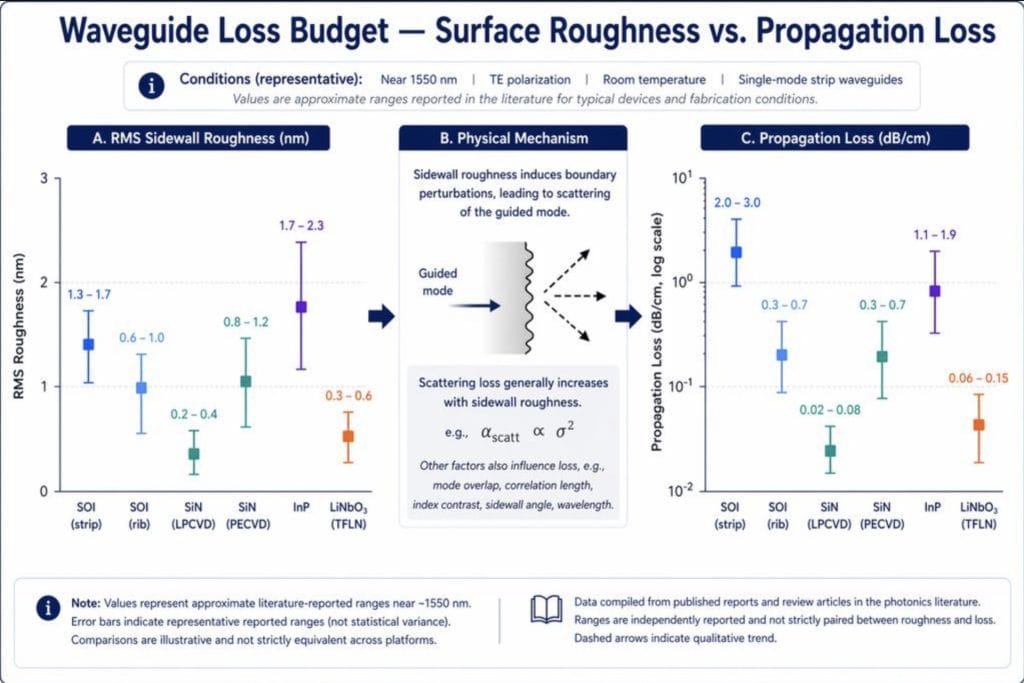
In conventional electronics, manufacturing imperfections are already a serious engineering challenge. In a photonic quantum computer, however, losing photons can directly undermine the quantum computation. That makes optical loss one of the critical engineering challenges for photonic quantum systems.
Xanadu and ASML are therefore investigating how advanced lithography and manufacturing processes can improve patterning control and potentially reduce these losses. One of the technical issues they will examine is line-edge roughness, or LER, that are microscopic variations along the edges of fabricated structures. It sounds like an obscure manufacturing detail but it’s far from it. At sufficiently large scales, such details can determine whether a quantum architecture can actually become a practical product.
The Quantum-Computing Bottleneck: Errors
Here, we reach the heart of the matter. Quantum computers are extraordinarily sensitive systems. Qubits can lose their quantum information through interactions with their environment and through imperfections in the hardware. Therefore, building a useful large-scale quantum computer isn’t simply a matter of producing more qubits.
The qubits must also be reliable enough to support error correction and, ultimately, fault-tolerant computation. That is why quantum computing has entered a new phase. The race is no longer simply: “Who can build the most qubits?”; it is increasingly becoming: “Who can build enough high-quality qubits, and control errors well enough to perform useful computation?”
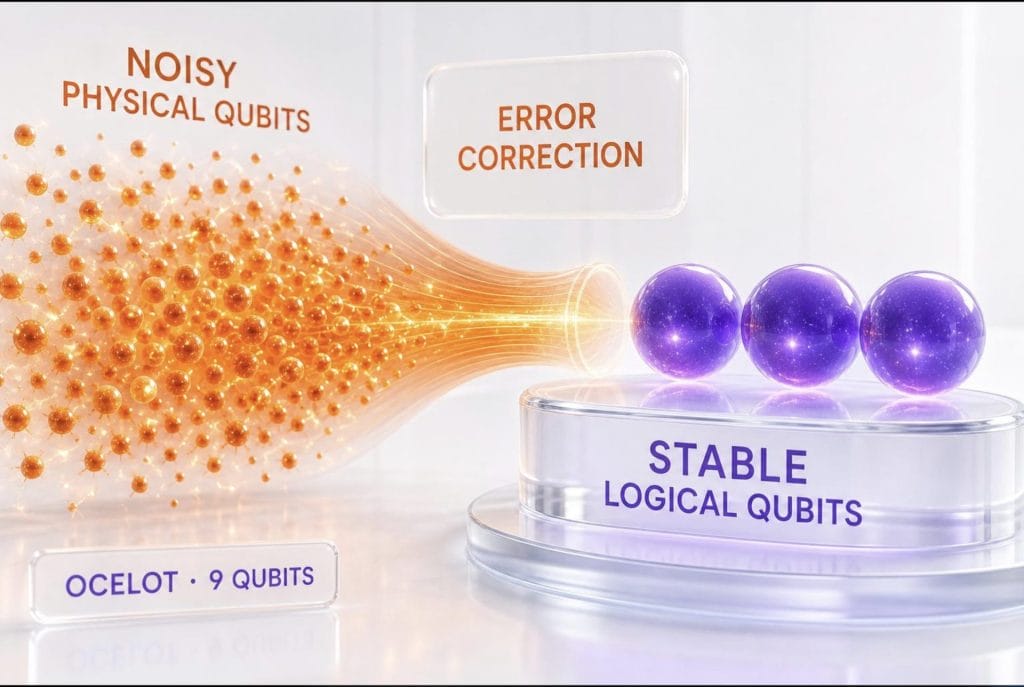
For photonic quantum computing, reducing optical loss is particularly important because unwanted photon loss can affect the quantum information being processed. Better manufacturing precision could therefore become one piece of the much larger fault-tolerance puzzle.
Why ASML Matters
This is where the story becomes much bigger than Xanadu.
ASML isn’t a quantum-computing company. Its expertise lies in one of the most difficult manufacturing technologies on Earth: lithography for semiconductor fabrication. Modern semiconductor manufacturing depends on the ability to create extraordinarily precise patterns at microscopic and nanoscale dimensions. The same manufacturing philosophy of increasing precision, controlling imperfections and improving repeatability could become increasingly valuable as photonic quantum hardware matures.
That doesn’t mean ASML is suddenly building quantum computers. Rather, Xanadu wants to explore whether advanced lithography know-how can help manufacture better photonic quantum structures. And that distinction is important.
This is a collaboration to investigate manufacturing approaches, not an announcement that a fault-tolerant quantum computer has suddenly arrived. And that makes the development even more interesting. Because the companies are beginning to address something that quantum computing has historically struggled with: How do you manufacture quantum hardware at scale?
The Hidden Revolution: From Laboratory To Factory
This may ultimately prove to be the most important part of the story. Many revolutionary technologies begin inside laboratories. But laboratory success and industrial-scale manufacturing are two very different things.
A scientist can demonstrate an extraordinary quantum effect on a small experimental device. Turning that demonstration into millions of highly controlled components is another matter altogether. The semiconductor industry spent decades developing precisely this capability.
It learned how to fabricate incredibly complex structures repeatedly, predictably and economically.
Quantum computing now faces a similar challenge. The next quantum revolution may therefore depend not only on better physics, but on better manufacturing. And photonic quantum computing is particularly interesting because it naturally intersects with the worlds of integrated photonics and semiconductor fabrication. That could give it an unusual path toward scaling.
Why Photons?
There are several competing approaches to building quantum computers. Superconducting qubits, trapped ions, neutral atoms, spin-based systems and photonic architectures are all being pursued. Photonic quantum computing takes a fundamentally different approach: using light as the carrier of quantum information.
Photons have some attractive properties. They can travel long distances with relatively low interaction with their surroundings, making them interesting not only for quantum computing but also for future quantum communication networks. Photonic systems can also potentially leverage technologies developed by the semiconductor and telecommunications industries.
But there is a catch. Photons are difficult to control perfectly. Losses, manufacturing precision matters, detection, interconnection matters, and error correction are all essential consideration. That is why manufacturing technology could become a decisive part of the photonic quantum race.
ASML + Xanadu: A Meeting Of Two Technological Ecosystems
Think of the collaboration as the intersection of two enormous technology ecosystems. ASML brings precision lithography, advanced patterning, manufacturing expertise and semiconductor-scale process control. Xanadu brings photonic quantum architecture, quantum optical circuits, quantum error-correction research and photonic quantum-computing systems. Put the two together and the objective becomes clear:
More precise manufacturing
↓
Better photonic structures
↓
Lower optical losses
↓
Better quantum performance
↓
A step toward fault-tolerant quantum computing
It is not the whole solution. But it could be an important piece of the puzzle.
And This Is Where The Story Becomes Strategic
There is a larger technological convergence taking place. For decades, computing evolved through the semiconductor industry. Then came the explosion of artificial intelligence. Now quantum computing is beginning to intersect with semiconductor manufacturing, photonics, advanced materials, lasers, control electronics and increasingly sophisticated software.
The boundaries between these industries are beginning to blur. The future quantum computer may therefore not look like an isolated scientific instrument sitting inside a university laboratory. It may increasingly resemble a manufactured technology platform. That is a profound shift.
The Road Ahead
Xanadu has been pursuing fault-tolerant quantum computing using photonics, with systems designed around operation at room temperature. The company has also been developing both quantum hardware and software, including its open-source PennyLane platform. The ASML collaboration is another indication that the company is thinking beyond laboratory demonstrations and toward manufacturing and eventual commercialisation.
But we should keep our feet on the ground. This collaboration does not mean that commercially useful, fault-tolerant photonic quantum computers are around the corner. The road remains technically formidable. Quantum error correction, photon loss, component integration, control systems and large-scale manufacturing all remain major challenges. What has changed is the nature of the conversation.
The question is increasingly shifting from: “Can quantum computers work?” to: “Can we manufacture quantum computers that work reliably and at scale?” That is a much harder question and, perhaps, a much more consequential one.