




A phone ad for an “AI-powered CRM” is not a software update. It is the opening frame of the biggest structural shift in the history of work. And almost no institution on Earth is ready for it.
A small advertisement on a phone screen can conceal a rather large idea. “AI-powered CRM,” it said. Four words that look like ordinary software marketing but describe something closer to a species event. We are watching software stop waiting for instructions and start pursuing objectives. That reflects a phase change.
The real question was never “will AI take jobs.” That framing is too small for what’s actually unfolding. The real question is whether humanity can sustain an intelligence explosion without triggering an economic, social, and environmental explosion right alongside it.
The Cascade Has Already Begun
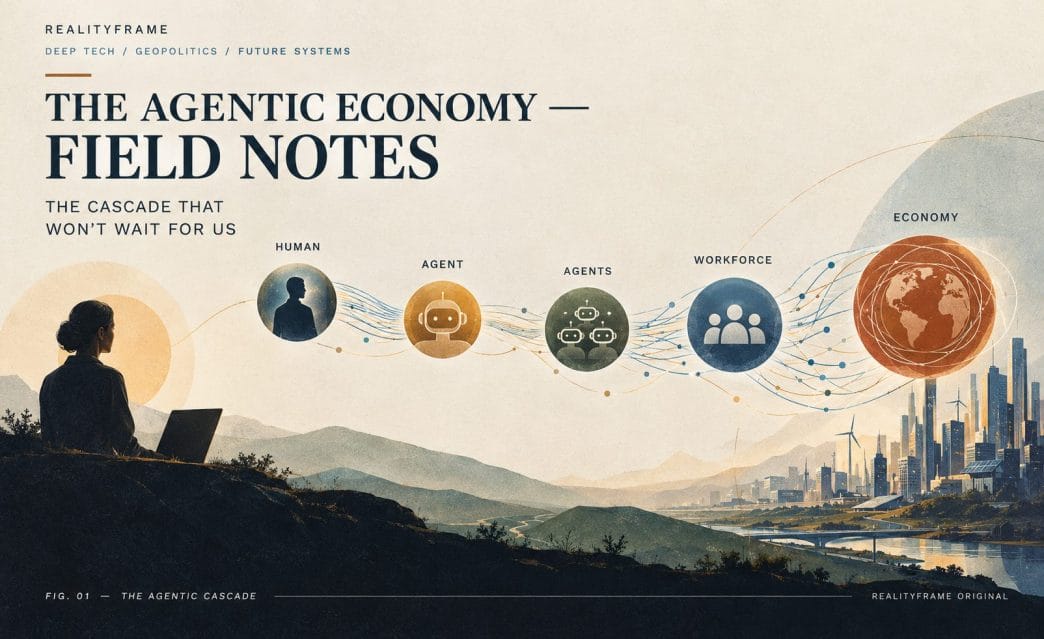
Trace the arc and it’s almost too clean: software, then AI assistant, then copilot, then agent, then workforce. While each generation did get smarter, it also got more autonomous. While first-generation AI answered questions, copilots helped humans execute tasks. Now, the agentic wave plans, executes, monitors, and hands off work inside live business systems, with humans shifting into the role of director and exception-handler rather than operator.
Picture a sales floor. A human once searched records, read old emails, built a proposal, sent the follow-up, updated the CRM, and booked the next call. That’s a full chain of labor. An agent can now run much of that chain itself. Multiply that shift across every department in every company on Earth, and you start to see why this cascade changes economics at the root, not the surface.
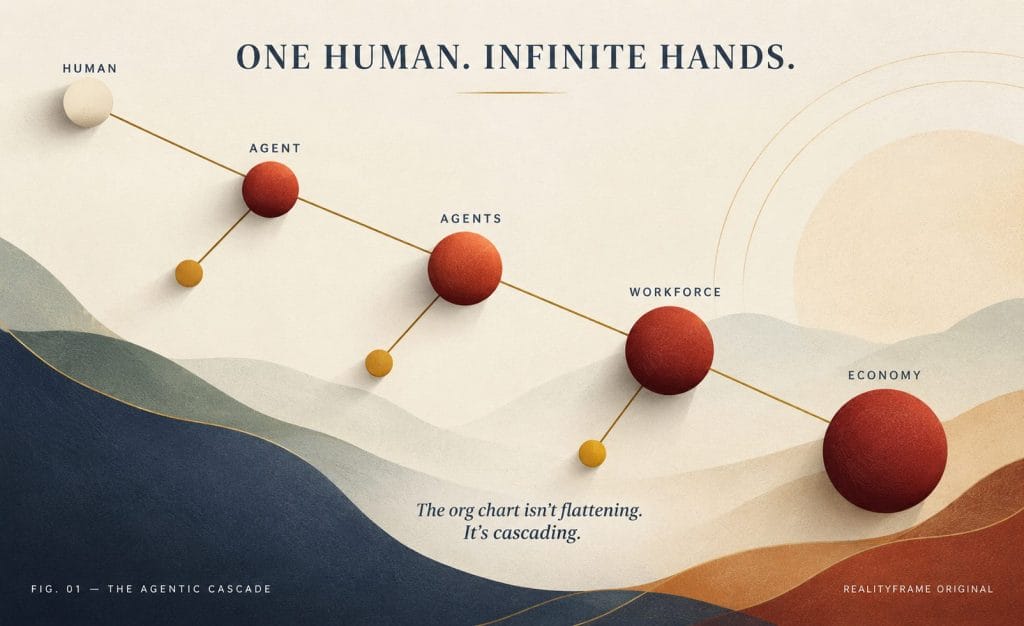
“A spreadsheet made a human faster. An AI agent becomes another pair of hands — eventually, another team member.”
One Human, Many Machines
The first visible effect is productivity multiplication. Instead of individuals running independent task sequences, now one person can supervise several agents at once. Each agent takes on a separate task such as researching prospects, drafting reports, watching for customer flare-ups etc. The human becomes an orchestrator of digital labor rather than a single node in the workflow.
But productivity is not the same as prosperity. Ten workers made twice as productive gives a company three choices: double output with the same headcount, hold output steady with half the headcount, or split the difference. That arithmetic, and not some abstract fear of robots, is where the real jobs debate lives.
The First Rung Is Disappearing
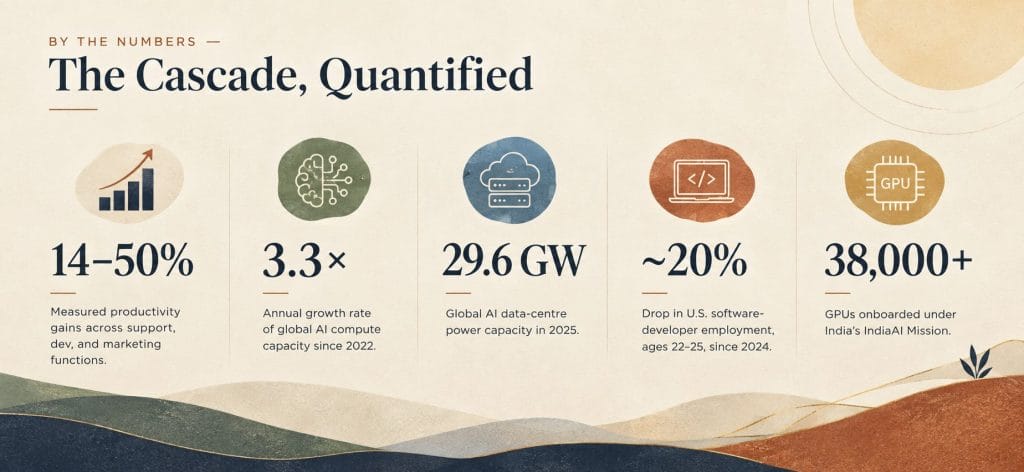
The danger was never that every job vanishes overnight. It’s that tasks disappear faster than workers can retrain into new ones. Most jobs are being transformed rather than eliminated outright. But the transformation is landing hardest on the young. Entry-level, routine work is precisely the work AI performs best, and entry-level, routine work is precisely how junior employees traditionally learned their craft.
If the first rung of the career ladder is the first rung to vanish, an uncomfortable question follows: where does the next generation of expertise come from at all?
AI’s Hunger Feeds Itself
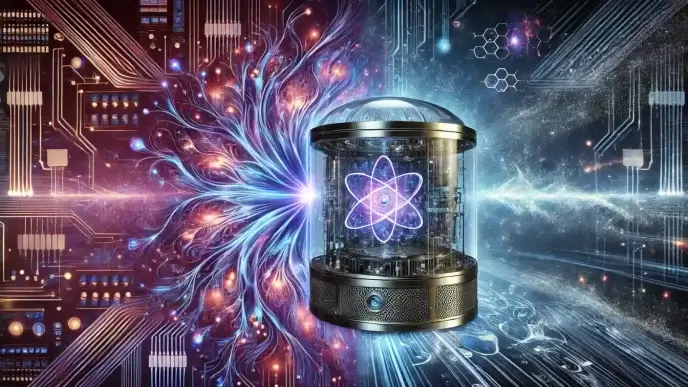
Here’s the feedback loop nobody markets: more capable AI creates more applications, more applications create more compute demand, more compute demands more chips, data centres, electricity, cooling, and networks. And that infrastructure enables still more AI. Instead of slowing down, the loop accelerates.
Every intelligent agent that feels weightless on a screen is backed by an enormous physical machine consisting of chips, servers, fibre, power plants, and water. Intelligence looks abstract. Its supply chain is anything but.
The Bottleneck Is Moving
Once intelligence becomes abundant, it stops being the scarce resource. Compute, energy, clean data becomes scarce, specialised talent, trust starts becoming scarce. Eventually, human attention and judgment may be the scarcest commodities left standing. More than bigger models, sustaining this boom will demand an entire ecosystem built to hold them up.
Concentration Or Equaliser?
AI rewards whoever already holds capital, data, compute, and talent. And that is exactly why it could become either the great equaliser or the great concentrator. A large firm can buy thousands of GPUs and a security team; a small business can’t. A wealthy nation can build sovereign AI infrastructure; a poorer one may remain a permanent consumer of someone else’s intelligence. That outcome won’t be decided by an algorithm. It will be decided by policy, competition law, education, and access.
“Fire can cook food or burn a house. AI is similar. Neither benevolent nor malevolent. The real question is whether our institutions can evolve as fast as our machines.”
Seven Shock Absorbers
The answer isn’t to slow the cascade. That ship has already sailed. The answer is to build the structures that let civilization absorb it without breaking.
- AI literacy as a baseline skill: Not just for engineers, but for the factory floor, the classroom, and the farm.
- Continuous reskilling: Replacing the old “educate once, work forever” model with a permanent learn-work-relearn loop.
- An AI infrastructure commons: So compute access isn’t gated behind corporate balance sheets.
- Clean, abundant energy: Because AI strategy is now inseparable from energy strategy.
- Human accountability by design: Autonomous execution must never mean autonomous responsibility.
- A shared productivity dividend: Gains that flow only to capital owners will breed backlash.
- Preserving the human edge: Judgment, creativity, empathy, and the ability to ask the right question.
India’s Fork In The Road
For India, the opportunity poses a full economic crossroad. The country’s old advantage was cheap, abundant labor. The AI economy rewards something structurally different: abundant human intelligence, amplified by abundant machine intelligence. India already holds real pieces of that puzzle: a deep technical workforce, mature digital public infrastructure, vast domestic market, and a national AI programme moving from pilot to platform. The climb ahead runs from AI consumer to AI user to AI builder to AI exporter. And each rung matters!
Human × AI, Not Human vs AI
Instead of anchoring the AI-human discussion in competition, a far more useful lens is multiplication. Humans supply purpose, judgment, values, and accountability. Machines supply speed, scale, memory, and tireless execution. Neither half produces what the combination produces. That seemingly trivial CRM advertisement was the opening frame of software that no longer waits for instructions, but pursues objectives on its own.
The RealityFrame takeaway: don’t stop the intelligence explosion: build the infrastructure to power it, the skills to absorb it, the institutions to govern it, and the mechanisms to share its gains. Keep the human being, not the algorithm, at the center of the revolution.