





This is the third piece in a three-part series on brain-computer interfaces. Read Part 1: The Brain Is the New Interface and Part 2: Neural Data: The New Oil.
Every piece in this series has ended with a version of the same sentence: the window is open, but it will not stay that way. This is the piece that explains what India needs to do before it closes.
The technology is mapped. The geopolitics are mapped. India appears in both analyses as an absence. A country with a large population, genuine software engineering depth, a cost-competitive biotech base, and one of the highest neurological disease burdens in the world, that has not translated any of those assets into a position in the BCI stack.
For those arriving here directly: a brain-computer interface is a device that reads electrical signals from the brain and translates them into commands a machine can act on. The race to build, deploy, and accumulate data from these devices is already underway. India is not in it.
That is not a permanent condition. But it is the current one, and it is getting more expensive to reverse with every year that passes.
Where India Actually Stands
To be precise: India is not entirely absent from neuroscience research. Labs exist. Clinical researchers are working on neurological disorders. Pharmaceutical manufacturing capability touches the broader life sciences ecosystem.
None of that amounts to a strategic position in BCIs. No Indian company competes at the hardware layer. No Indian AI lab is building neural signal decoding models at the frontier. No Indian platform is accumulating neural datasets. The four layers that determine long-term advantage in this space are, at present, entirely controlled by actors outside India.
The gap is not a lack of talent. It is a lack of directed effort at the specific layers where the race is being decided.
Where Entry Is Actually Realistic
Not every layer is equally accessible to a late entrant, and pretending otherwise wastes time.
Competing with Neuralink on implant hardware in the next five years is not a realistic ambition. Competing with Google DeepMind on foundational neural decoding models requires dataset access and research infrastructure that India does not have. These are not entry points. They are dead ends for a country starting from where India currently stands.
Two entry points are both realistic and strategically significant.
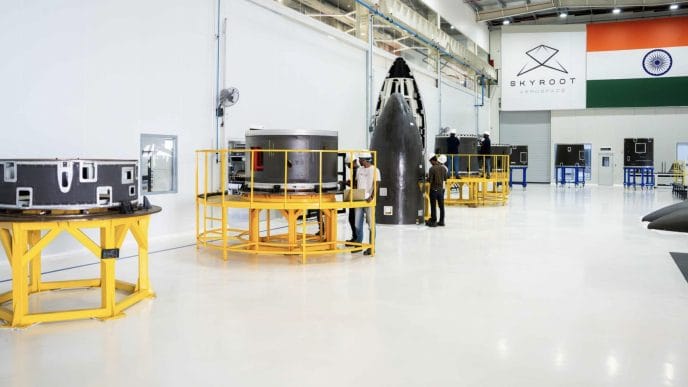
The first is manufacturing. Soft, conforming neural sensors require advanced fabrication, but not semiconductor-grade precision. India’s existing pharmaceutical and medical device manufacturing base is closer to what BCI hardware needs than it might initially appear. Positioning India as a supplier to the global hardware layer, rather than a builder of complete systems, is achievable within a five to ten year horizon. It does not generate headlines. It generates leverage, which is more useful.
The second is clinical infrastructure. Global BCI companies need large, diverse patient populations for human trials. India’s neurological disease burden is not a liability in this context. It is a negotiating asset. A regulatory and clinical infrastructure designed to attract BCI trial partnerships would pull global companies in, generate local expertise, embed Indian researchers at the frontier, and begin building the institutional knowledge that eventually enables more ambitious domestic efforts.
Late entrants into technology races have historically built their way in through exactly this path: supply chain first, clinical layer second, independent capability third. There is no shortcut, but there is a route.
The AI-Biotech Angle
There is a third entry point, more speculative but worth naming.
The signal processing layer of the BCI stack is a machine learning problem. It requires researchers who can build and train models on complex, high-dimensional biological data. India has those researchers. What it lacks is access to the neural datasets those models need.
This is a chicken-and-egg problem. Without a hardware presence, India does not generate neural data. Without neural data, India cannot build competitive decoding models. The way through it is partnerships: Indian AI labs that establish data-sharing agreements with clinical BCI programmes abroad, or embed themselves in international research consortia, can begin building model development capability before domestic data generation is possible. It is not a shortcut to independence. It is a way to avoid arriving at the AI layer empty-handed.
What Policy Needs to Do
Three things, specifically.
India needs a regulatory pathway for BCI human trials that is clear, navigable, and fast enough to be competitive. Right now it is none of those things. The Central Drugs Standard Control Organisation needs BCI-specific guidance. Forcing novel neurotechnology through frameworks designed for conventional medical devices is not a neutral administrative choice. It is a decision to make India an unattractive trial destination, which is what it currently is.
India needs targeted manufacturing incentives for medical-grade flexible electronics and bioelectronics components. The Production Linked Incentive logic already exists. Applying it deliberately to BCI-adjacent manufacturing is a policy decision, not an infrastructure problem. The infrastructure is close enough.
India needs directed research funding at institutions already working at the intersection of AI and biological signal processing. Not a moonshot programme. Targeted grants to existing labs that are one or two steps away from relevant BCI research. The gap is smaller than it looks from the outside. Closing it requires money and intent, not a reinvention of the research ecosystem from scratch.
The Cost of Waiting
Neural data compounds. The powers establishing early leads in hardware deployment and data generation will be difficult to dislodge not because their technology is necessarily superior, but because their datasets will be. A model trained on ten years of diverse neural data is not something a late entrant can replicate quickly, regardless of how good its engineers are.
India is not yet behind in a way that forecloses entry. The technology is early enough, and commercial scale is limited enough, that a determined entrant with the right choices can still find a position in the stack.
That window will not stay open indefinitely. The datasets are accumulating. The models are being trained. The hardware is being implanted.
India’s brain gap is real. Closing it is a choice. The question is whether anyone with the authority to make that choice is paying attention.