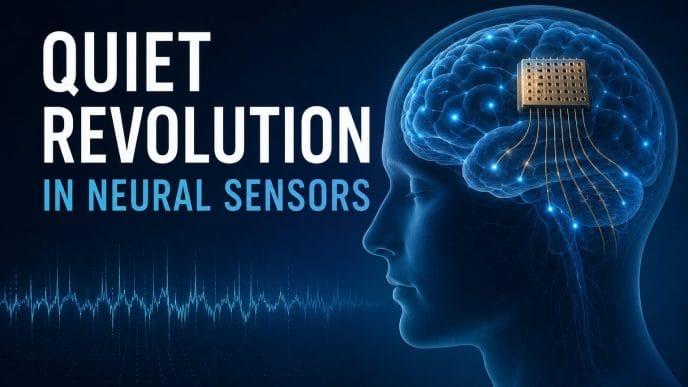






In the unfolding theatre of the digital age, the fiercest battles are no longer fought across borders, but within the delicate circuitry of the human brain. For decades, this idea lingered on the fringes – part philosophy, part speculation. Today, however, modern neuroscience and the architecture of digital platforms are converging toward a sobering realization: attention is not merely a passive faculty; it is an actively contested resource.
Yet, to frame this moment as an era of total “mind control” would be both inaccurate and counterproductive. The more plausible and far more consequential reality lies somewhere in between. We are entering an age not of absolute control, but of persistent cognitive influence, where human attention is continuously shaped, nudged, and competed for by increasingly intelligent systems.
From Attention Economy to Attention Engineering
The term “attention economy” has long been used to describe how digital platforms monetize user engagement. Companies like Google, Meta, and TikTok have built trillion-dollar ecosystems on the premise that human attention can be captured, measured, and optimized.
But something more nuanced is unfolding beneath the surface.
What began as attention capture is evolving into attention engineering, a system where algorithms do not just compete for your time, but learn your behavioral patterns, predict your preferences, and subtly adjust the information environment around you.
This is not coercion but, calibration.
Every swipe, pause, and click feeds back into machine learning models, refining their ability to present content that feels intuitively aligned with your interests. Over time, this creates a feedback loop that does not force decisions, but makes certain choices more likely than others.
The Brain Under Influence
To understand why this works, one must turn to the fundamentals of the brain.
Human cognition is governed by neuroplasticity, the brain’s ability to rewire itself based on repeated experiences. Attention acts as the gatekeeper of this process. What you consistently attend to strengthens neural pathways; what you ignore gradually fades.
Digital systems exploit this mechanism, often unintentionally, by aligning with the brain’s reward circuitry. Variable rewards – likes, notifications, new content -activate dopamine pathways, reinforcing engagement behaviors. Over time, this can shape habits, preferences, and even belief systems.
However, this does not imply total vulnerability.
The human brain is not a passive recipient. The prefrontal cortex, responsible for executive control and decision-making, allows individuals to override impulses, reflect, and redirect attention. While attention can be influenced, it is not fully controllable.
This distinction is critical.
The Myth of Total Cognitive Control
Popular discourse often swings between extremes. On one end lies techno-optimism, the belief that digital tools are neutral and empowering. On the other lies techno-pessimism, the fear that artificial intelligence will soon dominate human thought entirely.
Both miss the mark.
There is no evidence to suggest that current or near-future AI systems can exert absolute control over human cognition. Influence is probabilistic, not deterministic. Algorithms can increase the likelihood of certain behaviors, but they cannot guarantee outcomes.
Humans retain agency, albeit within an increasingly engineered environment.
The real shift, therefore, is not from freedom to control, but from neutral environments to strategically curated ones.
The Ambient Battlefield
A more accurate framework for understanding this era is what might be called soft cognitive shaping. Information is filtered, ranked, and personalized. Emotional triggers are amplified to sustain engagement. Behavioral patterns are subtly reinforced over time. None of this feels like manipulation because it rarely opposes your will. Instead, it aligns with it, guiding rather than forcing.
In this sense, the battle is not overt. It is ambient.
You are not being commanded; you are being continuously nudged.
Where AI Changes the Game
The introduction of advanced AI systems adds a new dimension to this landscape.
Unlike earlier algorithms, modern AI models can:
- Understand context and nuance
- Generate human-like responses
- Adapt in real-time to user behavior
This transforms digital platforms from static content distributors into interactive cognitive environments.
As AI evolves toward more generalized intelligence, its capacity to model human preferences, predict reactions, and optimize interactions will only increase. The line between tool and participant begins to blur.
Still, the same principle holds: influence deepens, but control remains incomplete.
Reclaiming the Mind
If influence is inevitable, the question shifts from avoidance to management.
This is where neuroscience offers a counterbalance.
Practices that reduce cognitive overload, such as focused attention, deliberate information consumption, and periods of mental stillness strengthen the brain’s regulatory systems. They enhance the ability to notice when attention is being pulled and to consciously redirect it.
Silence, often dismissed as inactivity, plays a particularly important role. It allows the brain’s default mode network to process information, integrate experiences, and generate original thought. Without such intervals, cognition becomes reactive rather than reflective.
In a world optimized for stimulation, the ability to disengage becomes a strategic advantage.
Three Possible Trajectories
Looking ahead, the interplay between human cognition and intelligent systems can unfold along three broad paths.
The risk scenario is one of high influence and low awareness. Individuals remain immersed in algorithmically curated environments without recognizing their effects. Attention becomes fragmented, decision-making reactive, and external systems gain disproportionate influence.
The most likely near-term path is hybrid adaptation. Society develops partial awareness. Tools for digital well-being emerge, and individuals adopt mixed habits, balancing engagement with occasional control. Influence persists, but so does agency.
The optimal scenario is one of high awareness and directed attention. Individuals consciously manage their attention, using technology as a tool rather than a guide. Cognitive processes become more intentional, and influence is actively negotiated rather than passively absorbed.
Reframing the Narrative
The idea of attention wars is compelling, but it must be framed carefully.
This is not a dystopian takeover, nor is it a benign evolution. It is a systemic shift in how influence operates, from external persuasion to internal modulation.
The stakes are not just economic or technological; they are cognitive.
Who or what shapes your attention increasingly shapes your perception of reality.
The Final Insight
The future will not be defined by those who simply consume information, nor even by those who create it. It will belong to those who understand the mechanics of attention itself.
Because in an environment where influence is constant and subtle, the ultimate advantage lies in a simple but powerful ability: the capacity to decide what deserves your attention and what does not.
Not perfectly. Not always. But consistently enough to remain the author of your own cognition.
We are not entering an age where minds are controlled. We are entering one where they are continuously influenced. And in that distinction lies the difference between dependence and sovereignty.