



Walk through any Indian bazaar and you’ll see a strange order within the chaos: shopkeepers predicting your needs, data traders disguised as street vendors, micro-coordination shaping macro flow. Surprisingly, this is exactly where the future of global technology seems to be heading, a world where intelligence, energy, biology, and governance merge into a seamless marketplace of interactions. And India, with its instinctive improvisation culture, might be better suited for this future than many expect.
Imagine a world where the digital and physical universes run like a perfectly timed local market. AI systems predict urban water needs like a chaiwala predicting the next rush. Biotech platforms grow food the way roadside vendors adjust stock according to weather. Space-based communication networks function like courier boys weaving through lanes at impossible speeds. This is not fantasy; these systems already exist in fragments today.
Take India’s ONDC, a massively open protocol that breaks Amazon-like monopoly by turning every seller into a digital node. For the first time, a nation created a marketplace architecture that acts like a “public digital bazaar.” Now imagine applying this openness to AI models, genetic engineering toolkits, medical device networks, and satellite data sharing. It becomes easy to see how India’s decentralized mindset could play a role in shaping the next technological civilization.
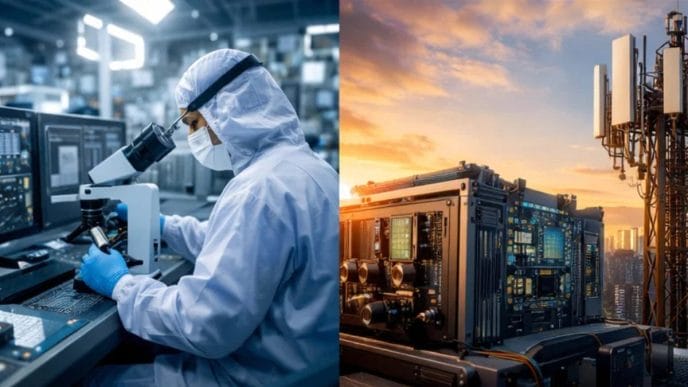
Globally, we also see similar patterns emerging. Tesla cars share data to learn from each other like auto drivers exchanging shortcuts. SpaceX Starlink forms mesh networks similar to villages passing signals across fields using mirrors or flags. CRISPR labs across the world share gene-editing libraries like farmers exchanging seeds. Even AIs like ChatGPT, Claude, and DeepSeek evolve by absorbing feedback in real time, much like Indian students learning from every exam result.
Now bring them all into one giant ecosystem, a planetary-scale tech bazaar. Here’s how it plays out through real examples:
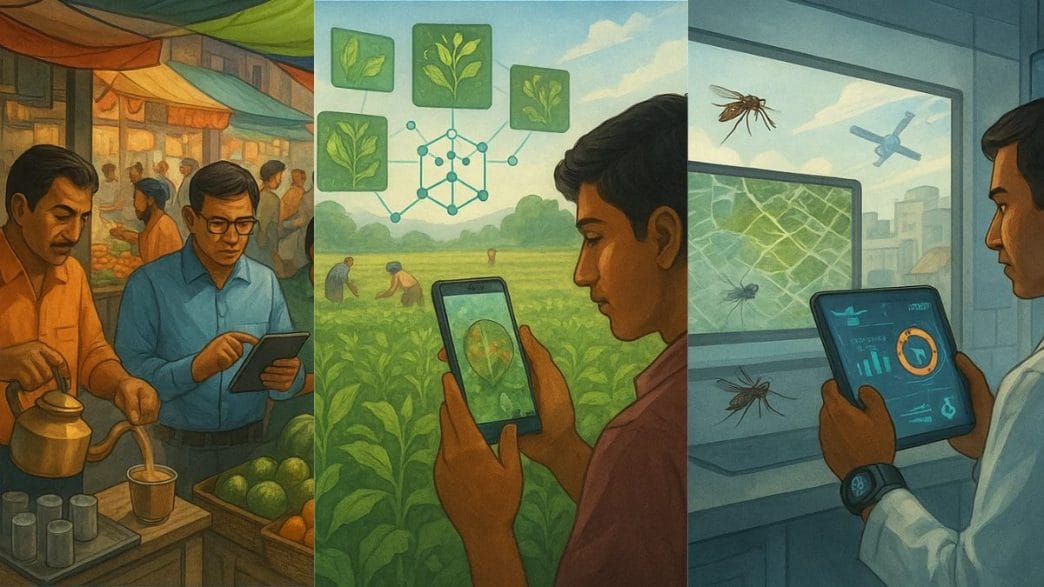
- A doctor in Bengaluru sees early dengue patterns on his wearable dashboard because an AI spotted mosquito density trends from satellite images.
- A Hyderabad biofoundry prints plant proteins using supercharged fungal strains inspired by recent CRISPR breakthroughs, ensuring city-level nutrition security.
- Rural entrepreneurs in Odisha run micro-data centers powered by rooftop solar, training small LLMs in their own languages.
- Kerala’s digital health IDs allow AI triage systems to coordinate beds during medical crises without chaos.
- A teenager in Indore trains a small generative AI model to predict crop diseases using images taken from a 2000-rupee refurbished smartphone.
These are not far-fetched possibilities; all the building blocks already exist somewhere in India today.
The biggest catalyst behind this bazaar-like technological future is India’s habit of solving problems with frugal engineering. Where the West optimizes for perfection, India optimizes for adaptability. Where multinational corporations build silos, Indian ecosystems naturally integrate: UPI connects banks that once refused to talk; Aadhaar links services across states; CoWIN scaled to billions of vaccine certificates; ISRO launches satellites at a fraction of global cost.
Combine this frugal innovation with India’s demographic power, 900 million people under 40, and a new pattern emerges. The coming technological civilization will not be driven purely by expensive Silicon Valley labs but by flexible, swarming, distributed intelligence systems. And India has been running a test version of this cultural operating system for centuries.
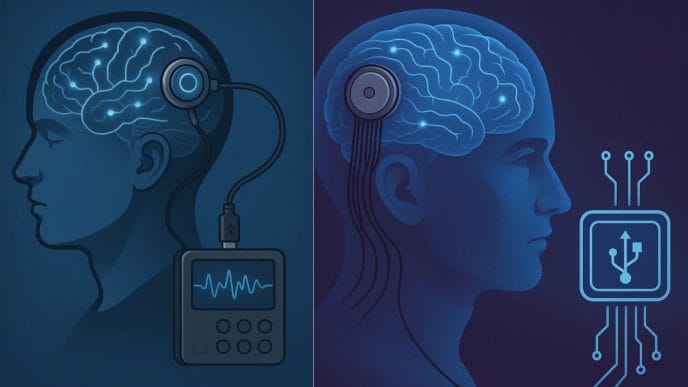
Even more exciting is how India can use this bazaar-model to shape the future of AGI, NeuroTech, and QuantumTech. In a world afraid of centralized AI control, India could propose an open-protocol AGI architecture, something like “ONDC for Intelligence.” Imagine thousands of small AI agents, each serving local needs but collectively forming a national superintelligence. Add to this the rise of Indian neurotech startups decoding EEG patterns for medical use, the quantum labs growing in IISc and IITs, and the private space ecosystem expanding under IN-SPACe. The convergence becomes clear.
The future may not belong to the largest single system but to the best-coordinated ecosystem. And coordination, adaptive, chaotic, improvisational, is something India understands intuitively.
The bazaar is not just a metaphor; it is a blueprint. A world running on decentralization, rapid learning, frugal scaling, interoperable protocols, and distributed intelligence looks far more Indian than American, Chinese, or European.
If the 20th century belonged to manufacturing giants and the early 21st century belonged to internet platforms, the coming decades will belong to nations that can synchronize intelligence, biology, governance, and energy into one dynamic marketplace.
India stands at the doorway, not as a follower but as a potential architect.