




The Silicon Heartbeat of the Digital Age
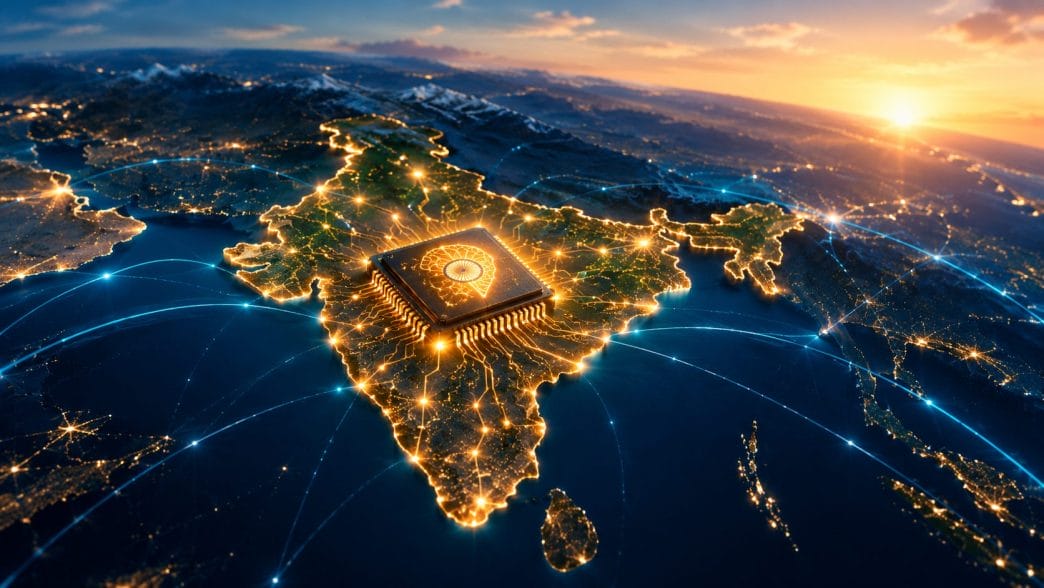
If rare-earth magnets are the muscles of the modern economy, semiconductors are its nervous system. Every smartphone call, every online payment, every satellite orbit, every aircraft navigation system, every AI model, and every autonomous vehicle ultimately depends on billions of microscopic transistors etched onto silicon wafers with astonishing precision.
Building a semiconductor fabrication plant is unlike constructing an ordinary factory. It demands clean rooms purer than hospital operating theatres, ultra-precise lithography machines, specialty gases, ultrapure water, stable electricity, highly trained engineers, and years of accumulated expertise.

The finished chip may fit on a fingernail. The ecosystem required to produce it spans continents. This explains why semiconductor manufacturing has become one of the world’s most strategically significant industries. Nations increasingly view domestic chip capability not merely as an economic opportunity but as an element of long-term resilience.
The Journey of a Simple Smartphone
Consider a smartphone resting quietly on your desk. Its design may originate in one country, its processor architecture may be developed in another, its chips may be fabricated elsewhere, its memory may come from another region.Meanwhile, its display, camera sensors, batteries, magnets, specialty chemicals, and software may each have different geographical origins. Finally, assembly occurs in yet another location before the product reaches the consumer.
This is globalization at its most sophisticated. Yet it also reveals a fundamental truth. A disruption affecting only one critical link can delay the entire chain.Modern manufacturing resembles a relay race. The baton must reach every runner on time.
Efficiency versus Resilience
For decades, businesses optimized supply chains for efficiency. Inventory was minimized, production was concentrated where costs were lowest, and suppliers became increasingly specialized. These strategies delivered lower prices and remarkable productivity.
However, recent disruptions reminded governments and industries that efficiency alone is not enough. A resilient supply chain values diversity alongside efficiency and it asks different questions:
- What happens if one supplier becomes unavailable?
- Can another country or company fill the gap?
- Should critical industries maintain strategic reserves?
- How much redundancy is worth paying for?
These questions increasingly influence industrial policy around the world.
“Resilience is not the opposite of globalization. It is globalization designed to withstand shocks.”
India at the Crossroads
India enters this changing landscape with significant strengths. It possesses one of the world’s youngest workforces, its digital public infrastructure has attracted global attention, it has engineering talent contributing to companies across the world, its expanding its manufacturing initiatives, while its research institutions continue to grow.
The announcement of India’s first NdFeB rare-earth magnet plant represents one example of efforts to strengthen domestic capabilities in strategic sectors. Yet building lasting industrial leadership involves much more than opening individual factories. It requires an expansive, interdependent ecosystem, including mining, processing, materials science, precision manufacturing, machine tools, electronics, logistics,testing laboratories etc.
Industrial leadership is rarely achieved through isolated successes. It emerges through interconnected systems.
The Hidden Power of Ecosystems
History suggests that enduring technological leadership depends less on individual inventions than on ecosystems that repeatedly transform ideas into industries.
A breakthrough in a laboratory must become a prototype; the prototype must become a product; the product must become a competitive business, and the business must scale into global manufacturing.
Universities, entrepreneurs, investors, suppliers, regulators, and skilled workers all play different roles in this journey. When these pieces reinforce one another, innovation accelerates.

The Real Competition
It is tempting to view the global technology race as a contest between countries. The deeper reality is more nuanced.
The most successful economies cultivate institutions that learn continuously, adapt quickly, encourage innovation, and collaborate across sectors. Factories, research, education, and trust all matter in this journey.
No single ingredient is sufficient on its own. Together, they create resilience.
A New Definition of National Strength
For centuries, national power was measured by territory, armies, and natural resources. Today, another measure deserves equal attention: the ability to innovate, manufacture, adapt, and recover from disruption.
The nations best prepared for tomorrow may not necessarily possess the largest reserves of critical minerals. They will be the ones capable of transforming those resources into technologies that improve lives, strengthen economies, and respond effectively to change.
Supply chains have evolved into strategic infrastructure that are invisible, complex and essential.
The Quiet Revolution
History often remembers dramatic events: the signing of treaties, the launch of rockets, the unveiling of monumental inventions. Yet the quieter revolutions frequently shape the future just as profoundly. A new refiner, a semiconductor fabrication plant, a research laboratory, a skilled technician graduating from a university, a startup solving a difficult manufacturing problem.
While these milestones rarely dominate headlines, collectively, they determine whether a nation becomes merely a consumer of technology or one of its creators.
The contest unfolding today is not simply about who produces the cheapest products. It is about who builds the most resilient ecosystems.
The future will belong not only to those who invent remarkable technologies, but to those who can reliably design, manufacture, refine, transport, and continually improve them.
That is the new great game. And it has only just begun.