




Why India’s Engineering Education Must Prepare for the Age of Drones, Space and AI Warfare
The wars of the future may not begin with tanks or fighter jets. They may begin through systems like drones that operate with speed, coordination, and limited human intervention.
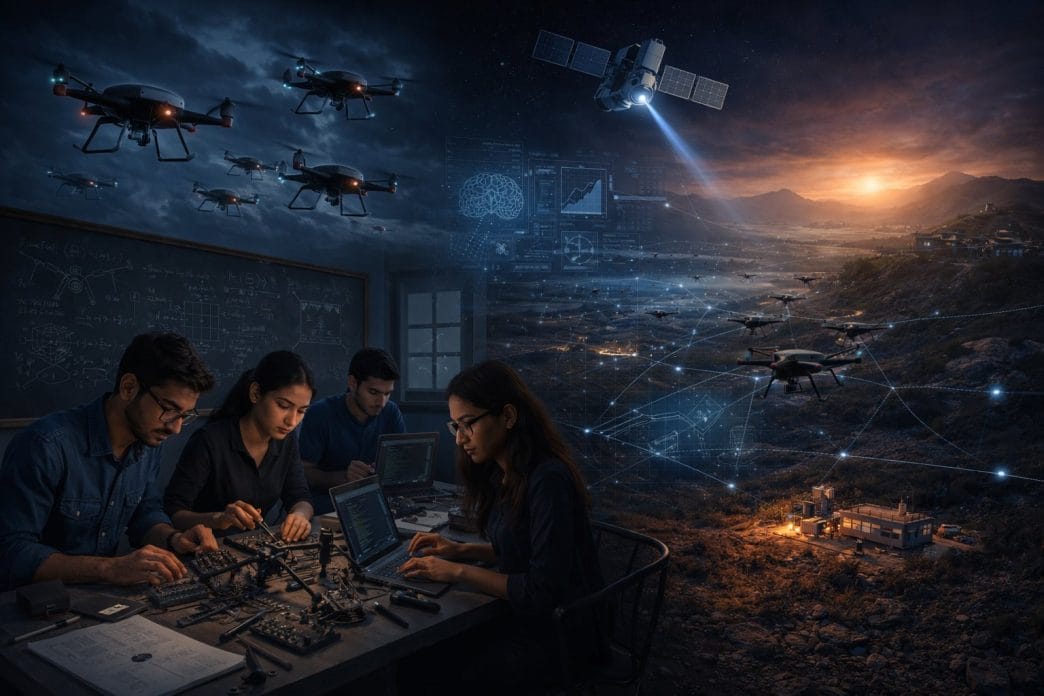
A swarm of autonomous drones appearing over a battlefield, satellites tracking movement in real time, artificial intelligence systems analysing threats within milliseconds, and electronic warfare disrupting communication are no longer speculative scenarios. They reflect a shift in how power is exercised. What becomes visible in such moments is not just technological sophistication, but dependence on the ability to design, integrate, and operate complex systems.
Modern power, in this sense, rests as much on engineering capability as it does on physical assets. The question, then, is whether India’s education system is preparing for this shift with the seriousness it requires.
A Changing Technological Landscape
Global competition is no longer defined primarily by manpower or conventional weapons. It is increasingly shaped by advances in artificial intelligence, autonomous systems, space infrastructure, and cyber networks, all of which function as interconnected layers within broader strategic systems.
India has demonstrated capability in parts of this landscape. The Indian Space Research Organisation has established a consistent track record in satellite launches and planetary missions, while programs such as Gaganyaan signal an intent to expand its presence in space.
At the same time, the nature of conflict itself is evolving. Drones, AI-enabled surveillance, precision systems, and cyber operations are no longer peripheral tools but central components of modern capability. In this environment, technological strength is not an advantage but a baseline requirement, and that baseline depends on the depth and quality of human capital.
Drone Warfare and Systems Integration
Few developments illustrate this shift as clearly as the rise of drones. Unmanned aerial vehicles have moved from experimental use to core military infrastructure, supporting reconnaissance, surveillance, and targeted operations while extending reach and reducing risk to personnel.
India is developing capabilities in this space through a mix of startups and defence institutions working on surveillance systems, loitering munitions, and counter-drone technologies, with applications that extend beyond defence into areas such as border management and disaster response.
What is often understated is the level of integration required to make these systems function reliably. A drone is not a standalone technology but a coordinated combination of flight control, computer vision, sensor integration, materials engineering, and navigation, all operating together in real time, where a failure in one component can compromise the entire system.
Most engineering programs, however, are not designed for this level of integration, as they continue to treat disciplines as separate tracks even when real-world systems demand coordination across them.
The Expansion of the Space Economy
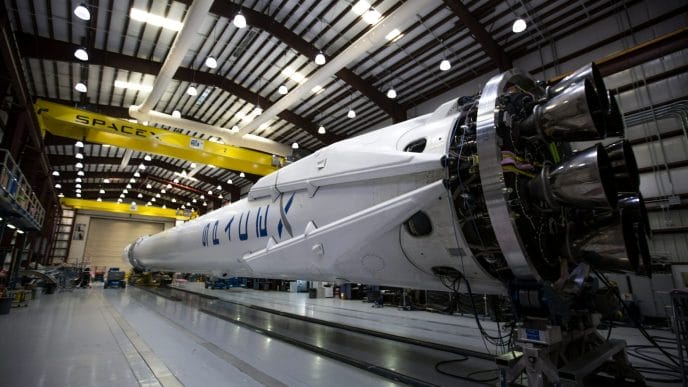
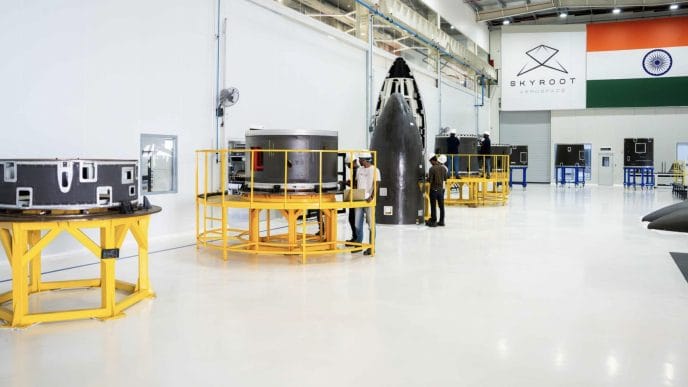
Alongside developments in drone technology, the space sector is entering a phase of sustained growth, driven by both public investment and private participation in satellites, launch systems, and space-based services that support communication, navigation, environmental monitoring, and security.
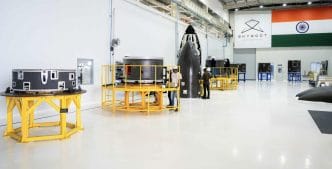
India has taken steps to open this sector through IN-SPACe, enabling private players to build launch vehicles, satellite platforms, and data-driven services, and contributing to the emergence of a broader space ecosystem.
Globally, the space economy is projected to cross hundreds of billions of dollars over the next decade, with increasing private participation accelerating both innovation and competition. The technical demands of this sector are correspondingly high, requiring expertise in orbital mechanics, propulsion, satellite engineering, robotics, and data analysis, often within tightly integrated systems operating under strict constraints.
The demand for such capability is growing rapidly, while the supply remains uneven.
The Engineering Education Gap
India produces engineers in large numbers, with over a million graduates entering the workforce each year, but the gap lies in alignment between what is taught and what is required in practice. While scale is often presented as a strength, employers across industries continue to report difficulty in finding engineers who can work on complex, real-world systems.
Many institutions still rely on curricula that prioritise theoretical instruction and standardised evaluation, with limited emphasis on applied problem-solving, interdisciplinary work, or sustained interaction with industry. Access to well-equipped laboratories and meaningful practical exposure remains inconsistent.
At the same time, the nature of engineering work has shifted toward problems that require familiarity with artificial intelligence, robotics, cybersecurity, and advanced electronics within a single system. Training that treats these domains in isolation does not translate effectively to environments where integration is central.
Talent as a Strategic Variable
Technological capability has repeatedly reshaped global power structures, from the role of radar in air warfare to the impact of nuclear technology on deterrence and the influence of computing on the modern economy.
The current phase, driven by artificial intelligence, autonomous systems, and space infrastructure, is comparable in scope and likely to have long-term implications for both economic and strategic positioning.
In this context, engineering education extends beyond workforce development and becomes a matter of national strategy. Countries that develop strong technical ecosystems are better positioned to innovate, compete, and maintain strategic autonomy, while those that do not risk dependence on external systems and expertise.
Rethinking the Model
Adapting to this shift requires more than incremental changes. Educational models need to reflect not only emerging technologies but also the way these technologies interact within larger systems.
Students should have opportunities to work across domains, engage with applied problems, and understand how different components function together under real constraints. Stronger collaboration between academic institutions, research organisations, and industry can help bridge the gap between theory and practice through internships, research projects, and startup ecosystems.
This is not simply a question of updating subjects, but of rethinking how engineers are trained to approach complexity.
Where This Begins
The effects of these changes will be visible in defence, infrastructure, and industry, but their origins lie in classrooms and laboratories where students first engage with engineering as a practical discipline.
It is in these environments that the transition from learning to application takes place, shaping the capabilities that will eventually define outcomes at a larger scale.
The Road Ahead
India’s ambitions in space, defence, and advanced technology are expanding, supported by policy initiatives and increasing private participation. These developments create favourable conditions, but their success depends on capability.
Engineering education will need to evolve into a system that supports experimentation, builds practical competence, and prepares students to work on complex, integrated technologies.
The shift required is not incremental. It is structural, and it will determine whether India develops the depth of technical capability needed to compete in an increasingly system-driven world. Because in the end, the constraint is not access to technology. It is the ability to build and improve it. And that is where the real competition now lies.