




In NJIT labs, researchers used AI to discover five novel crystal structures for multivalent-ion batteries, dramatically accelerating materials discovery. Not discovered through traditional methods. Invented through computational design. These aren’t tweaks to lithium chemistry or slight improvements to existing tech. They could challenge lithium dominance.
While scientists were still writing research papers, artificial intelligence was already moving atoms around in computational space, testing combinations that no human would have thought to try.
NJIT’s Dual-AI Breakthrough
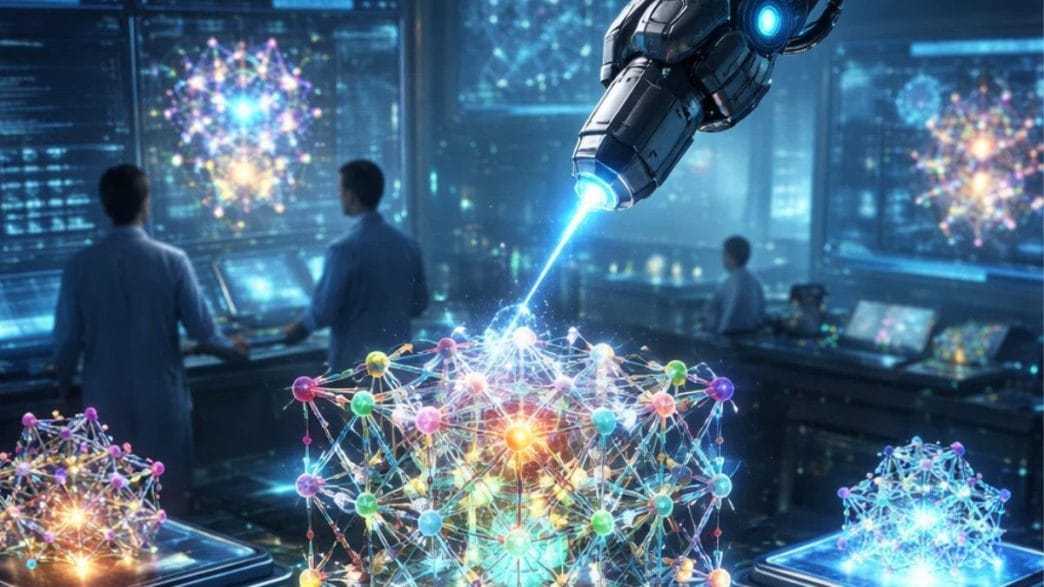
NJIT researchers tackled millions of impossible material combinations. They built a dual-AI system that acts like both inventor and critic.
How Inventor Meets Critic
Here’s how it works. First, a Crystal Diffusion Variational Autoencoder generates thousands of hypothetical structures with wide-open channels for ions to zip through. Think of it as the dreamer. Then a fine-tuned Large Language Model plays the skeptic, filtering out which candidates could actually be built in the real world and won’t explode under pressure.
AI yielded five stable porous oxides with wide ion channels, dramatically accelerating discovery. The catch with these multivalent-ion batteries is clever. Magnesium, calcium, aluminum, and zinc carry two or three positive charges instead of lithium’s single charge. More charges mean more energy packed into the same space. But bigger ions move like cargo trucks through narrow streets. The AI solved this by designing crystal structures with superhighways instead of alleys.
Quantum Validation Confirms Designs
NJIT validated their AI structures using quantum mechanical simulations. Quantum machines now crack chemistry problems regular supercomputers can’t touch.
IonQ-Hyundai Simulations
IonQ teamed up with Hyundai for pioneering lithium-air simulations on quantum hardware. Chemical reactions happen in the quantum realm. Electrons don’t follow neat paths; they exist in probability clouds, tunneling through barriers, doing things that classical physics says shouldn’t happen. Simulating this accurately means you need a quantum system. IonQ’s algorithms model lithium compounds with precision impossible for even the beefiest classical computers.
Google Willow’s Error Fix
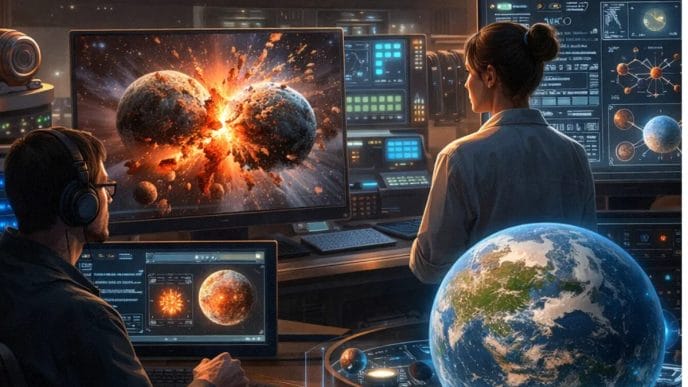
Then Google’s Willow quantum chip, announced December 2024, changed everything. This 105-qubit chip performed a calculation in under five minutes that would take today’s fastest supercomputers 10 septillion years.
But the real story isn’t speed. It’s error correction. Quantum systems are fragile beasts. For 30 years since Peter Shor’s 1995 paper, researchers chased “below threshold” error correction, where adding more qubits actually reduces errors instead of multiplying them. Willow cracked it.
For battery researchers, this opens transformative capabilities. You can now simulate exactly how a new battery material will behave before building a single prototype. Every chemical bond, every electron transfer, every potential failure mode, all modeled with atomic precision.
DARPA Powers Factories
Quantum breakthroughs demand factories; DARPA delivers. DARPA’s AMME program advances precision manufacturing technologies for complex materials.
India’s Urgent Need
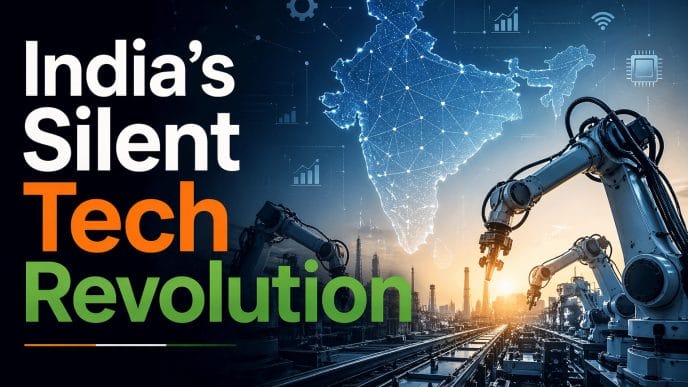
US labs dream atoms; India needs factories now. Nobody needs this technology more urgently than India. The numbers tell a story of ambition crashing into reality. India’s EV battery market will explode from $2.22 billion in 2024 to $13.89 billion by 2033, fueled by government mandates and cities choking on pollution.
But here’s the problem: India sold nearly 2 million EVs in 2024 yet imported most cells from China, South Korea, and Japan, aiming to hit 13% domestic production by 2030. Ola Electric already runs a gigafactory in Chennai pumping out cylindrical cells, but it’s a drop in an ocean of demand.
This is where AI-designed batteries using magnesium or zinc could flip the script entirely. India wouldn’t need to compete for lithium deposits controlled by a handful of countries. These materials are everywhere, abundant, and don’t require the same geopolitical gymnastics.
Research Timelines Compressed Dramatically
Battery research used to follow a predictable rhythm: hypothesize, synthesize, test, publish, repeat. Each cycle ate months or years. Grad students built entire dissertations around testing one material family.
What makes this moment strange is the timing. Climate pledges demand fast electrification, grid storage for renewables, denser consumer power. The tools arrive right on time.
Algorithms now dream crystals while India’s gigafactories wait. The power shift runs at machine speed.